Sliding or hinged wardrobe doors: how to choose
In short
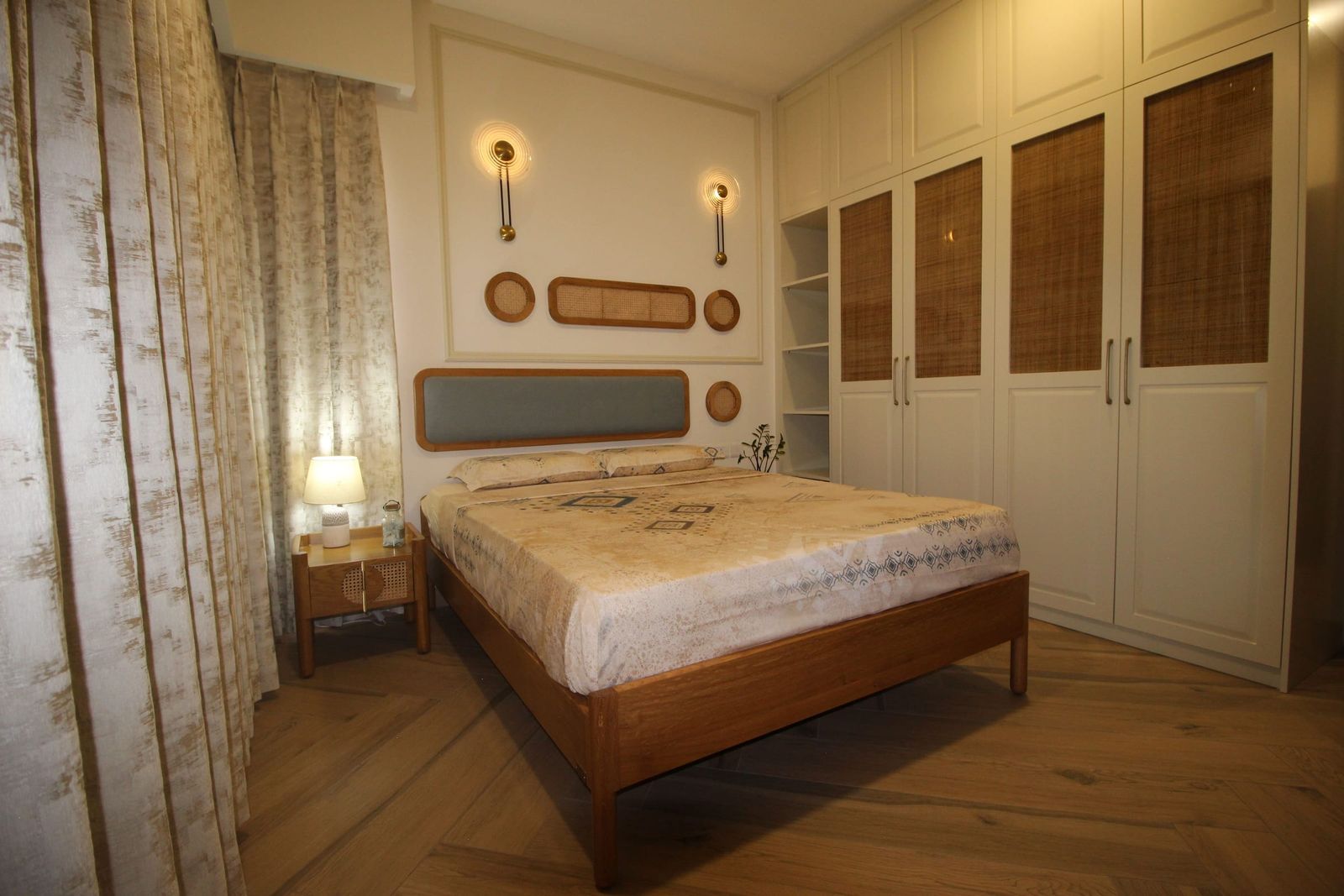
Choose sliding doors when the room is tight and a swinging door would hit the bed or block the passage. Choose hinged doors when there is space in front, because they open the whole wardrobe at once and can carry panelling, cane or handles. Sliding saves floor; hinged gives access.
A wardrobe is usually the largest piece of furniture in a bedroom, and its doors decide how the room works around it. The question is not really about style. It is about how much floor there is in front of the wardrobe, and how you like to see what is inside.
How much space do hinged doors need?
As much as the door is wide, in front of it, clear. A typical wardrobe door is between 45 and 60 centimetres wide, so that much floor has to stay free of the bed, the dresser and the path to the bathroom. If the bed is closer than that, hinged doors will meet it, and you will open them halfway every day for years.
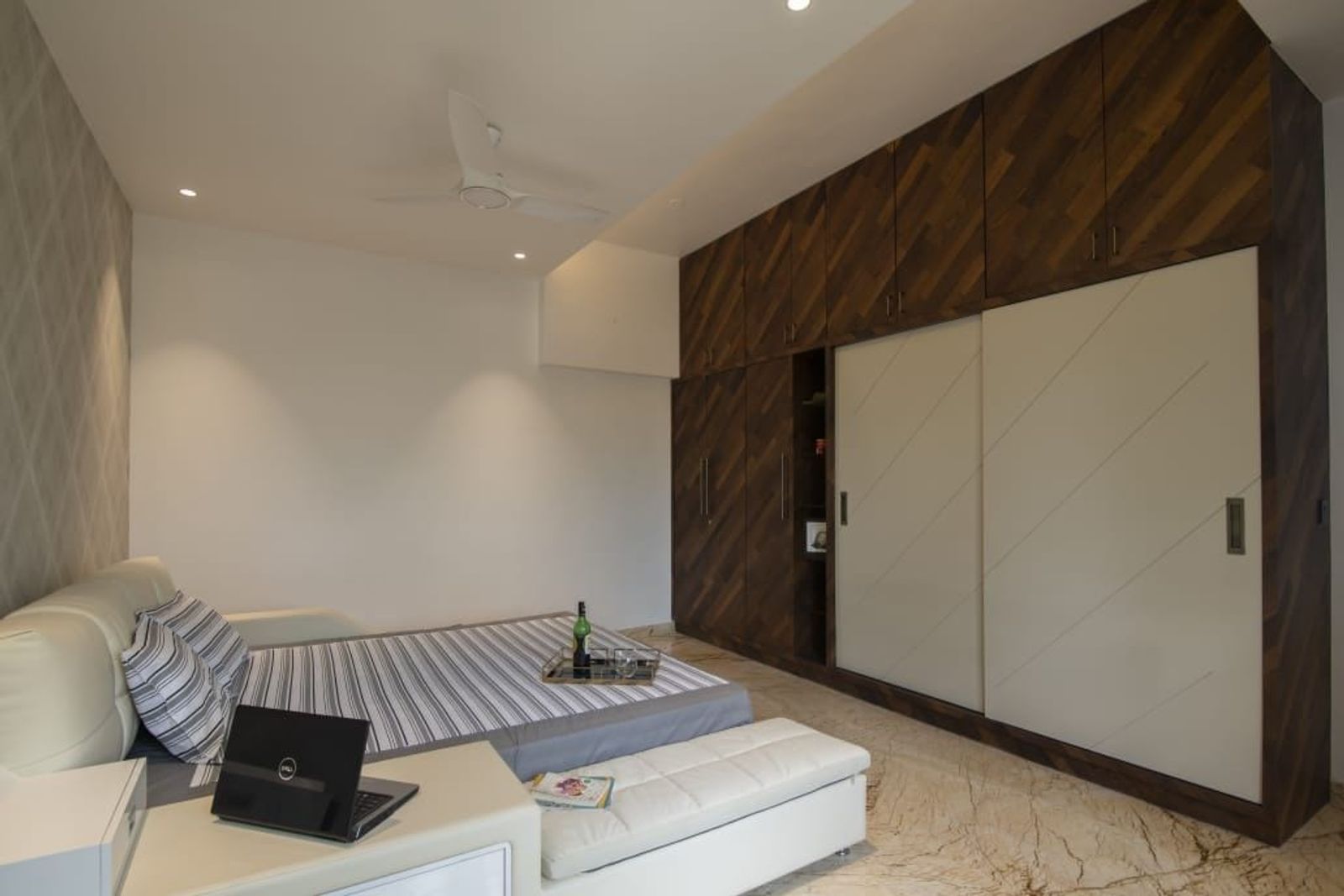
Sliding doors need no swing space at all. They move along their own track, inside the wardrobe’s footprint.
Which gives better access?
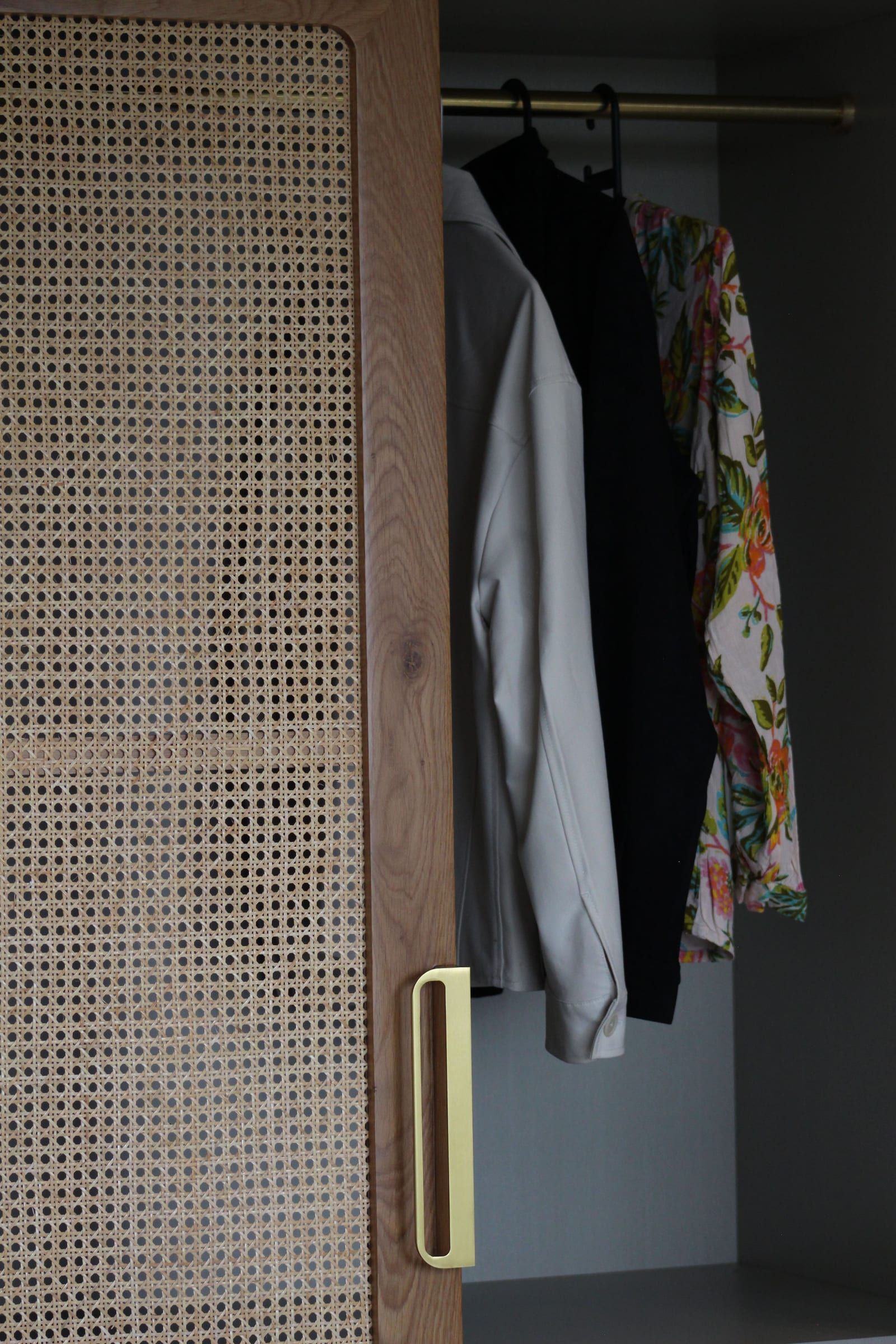
Hinged doors, clearly. Open them and the whole wardrobe is in front of you. Sliding doors only ever show part of it, because one door always sits in front of another. That matters most for a wardrobe full of hanging clothes, where you want to see the whole rail at once, and least for one mostly of drawers and shelves.
The width of the panels matters with sliding doors. Two very wide panels leave half the wardrobe hidden at any time; three narrower ones on a longer wall let you open any section you need.
Which looks better?
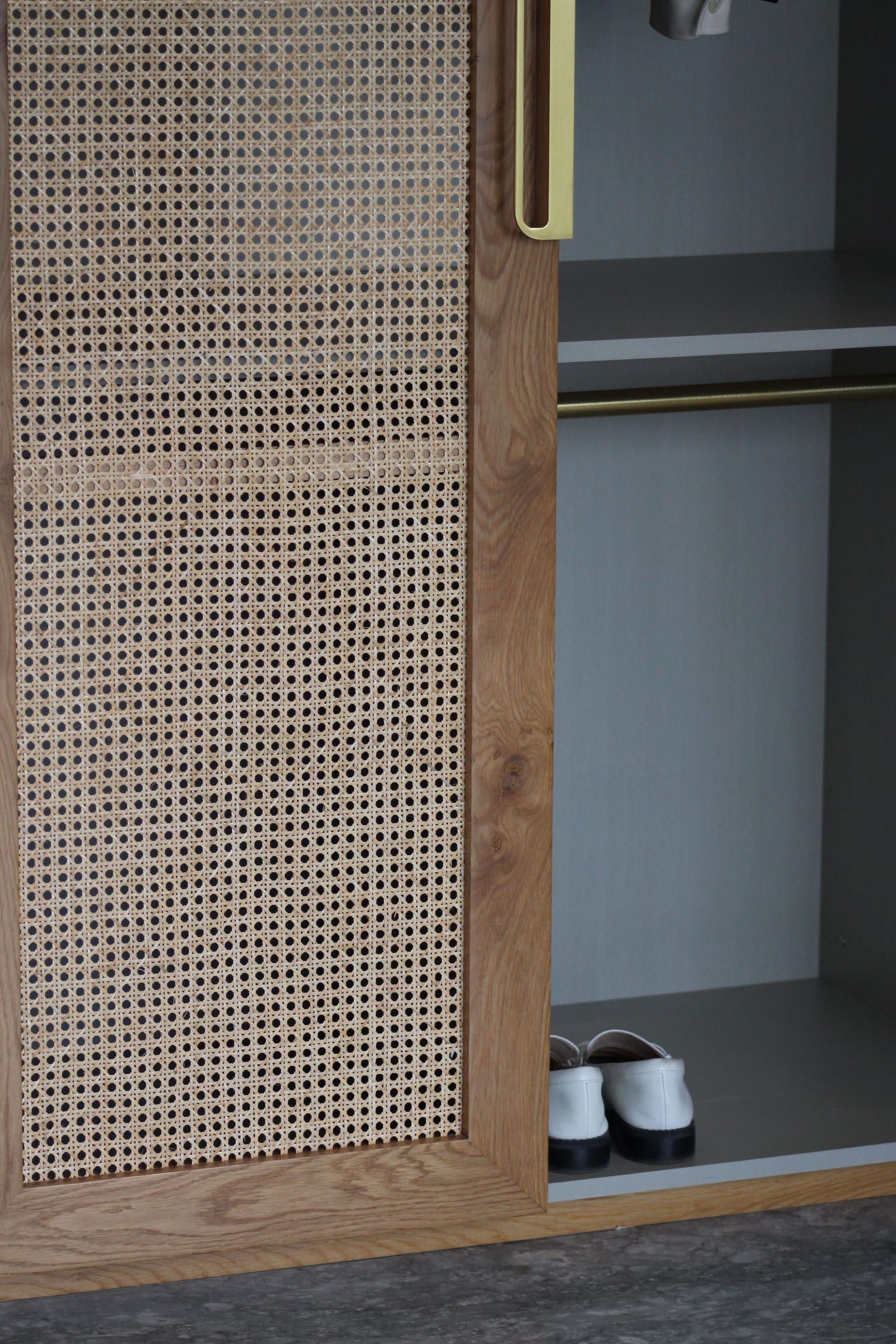
Both can look exceptional; they look different. Hinged doors suit panelling, mouldings, cane and woven insets, and handles that are pieces of jewellery in their own right. Sliding doors suit large, uninterrupted faces: lacquered glass, mirror, a single veneer that runs across the whole wall, or a wardrobe set flush into panelling so it nearly disappears.
Do sliding wardrobes last as well?
They can, and it depends almost entirely on the track and the rollers. A good sliding system runs on a heavy aluminium track with rollers rated for the door’s weight, glides closed under its own soft-close, and keeps the doors from rattling or jumping the track. A poor one is the most common complaint about sliding wardrobes anywhere. Ask what the system is rated to carry, especially for tall doors in glass or with a mirror.
Hinged doors are simpler, but they have their own failure: a heavy, tall door on too few hinges drops out of line. A floor-to-ceiling door needs four or five hinges, and soft-close on each.
Which is better for a small bedroom?
Sliding, almost always, unless the wardrobe is on a wall with nothing in front of it. In a large bedroom or a dressing room with clear floor, hinged doors give better access and more freedom in the design. And in a dressing room, many people choose no doors at all. See planning a walk-in wardrobe.
Quick comparison
| Sliding | Hinged | |
|---|---|---|
| Floor space in front | None | The width of a door |
| Access | Part of the wardrobe at a time | All of it at once |
| Suits | Narrow rooms, large plain faces, glass, mirror | Larger rooms, panelling, cane, statement handles |
| What to check | Track, rollers and their weight rating | Number of hinges, soft-close, adjustment |
How La Kova builds wardrobes
We build both, on the same calibrated plywood and factory edge-banding as our kitchens, with shutters in natural veneer, matte acrylic, PU-lacquered glass or laminate and hardware to Blum and Hettich standards. See wardrobes and walk-in closets, or the cane wardrobes in the Verdure house.
From La Kova
Read next
- Planning a walk-in wardrobe or dressing room How to plan a walk-in wardrobe or dressing room: the space it needs, depths and hanging heights, layouts, lighting, ventilation and what goes inside.
- Acrylic, laminate, veneer or lacquered glass: choosing kitchen shutter finishes Acrylic, laminate, natural veneer and PU-lacquered glass compared for kitchen shutters: how each looks, wears, cleans and ages, and where each belongs.
- Kitchen hardware: hinges, drawers, larders and corners Soft-close hinges, tandem drawers, pull-out larders, corner units and lift-up wall cabinets explained: what each does, where it goes and what to check.
Planning a kitchen or a wardrobe? Send us the floor plan, or a photograph of the room.
Let's connect