Kitchen hardware: hinges, drawers, larders and corners
In short
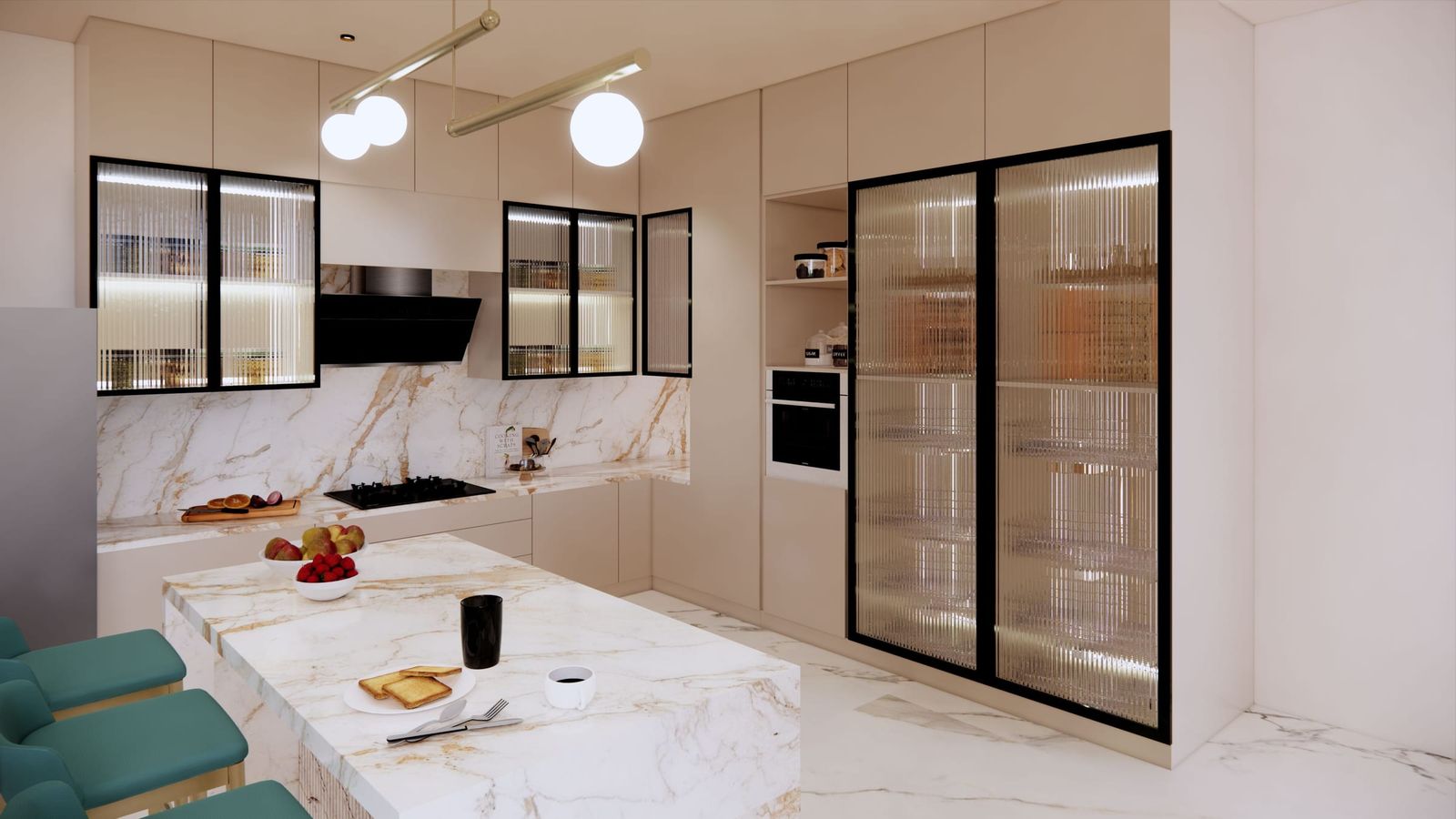
Hardware is the part of a kitchen you touch most, so it is the last place to save money. Look for soft-close hinges, full-extension drawers that carry real weight, a pull-out larder for tall storage, a designed corner solution, and lift-up flaps for wall units. Good hardware also protects the shutters, because doors that never slam never chip.
A kitchen is opened and closed thousands of times a year. The finishes are what you choose it for; the hinges, runners and fittings are what you live with. Cheap hardware is the most common reason a good-looking kitchen starts to feel tired within a few years: doors drop out of line, drawers stick, and corners slam.
What makes a good hinge?
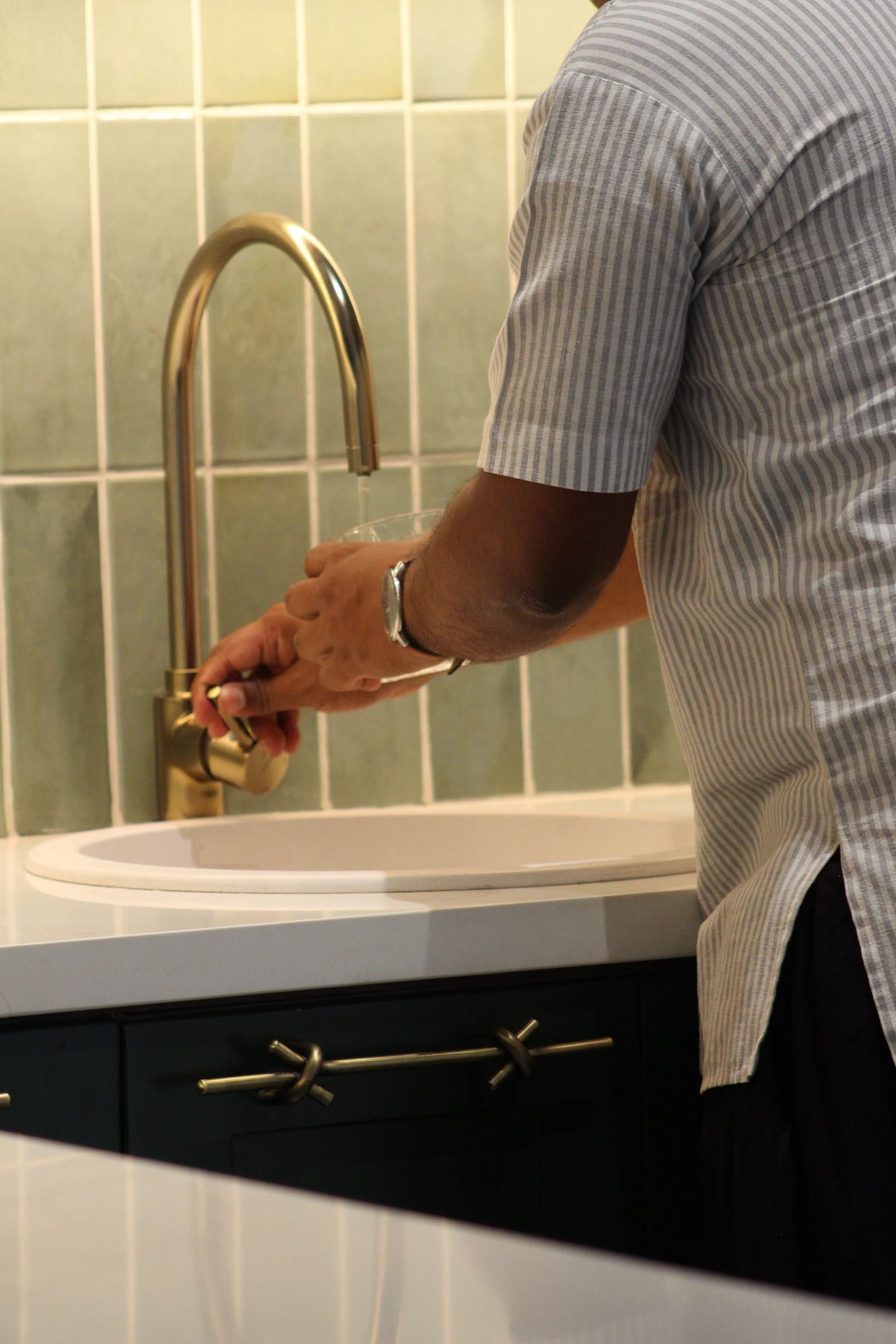
A concealed hinge that is adjustable in three directions, so a door can be brought back into line in a minute rather than refitted, with soft-close built in so the door settles shut instead of banging. It should be specified for the weight and height of the door: a tall larder door or a glass door needs more hinges, or heavier ones, than a small base unit.
For handle-free kitchens, push-to-open mechanisms open the door with a press on the face. They work well, but pair them with a matte finish that does not show fingerprints. See choosing shutter finishes.
Drawers or doors for base units?
Drawers, wherever you can. A base cabinet with doors and a shelf hides half its contents at the back; a stack of deep drawers brings everything to you in one movement. That is why most well-planned kitchens now have very few base doors at all.
What to look for in the runners:
- Full extension, so the back of the drawer comes all the way out
- Load rating to match the job: pots, pans and pressure cookers are heavy
- Soft-close, so a full drawer closes gently
- Tandem or box systems, with metal sides, which stay rigid and square for far longer than a wooden box on cheap runners
What is a pull-out larder?
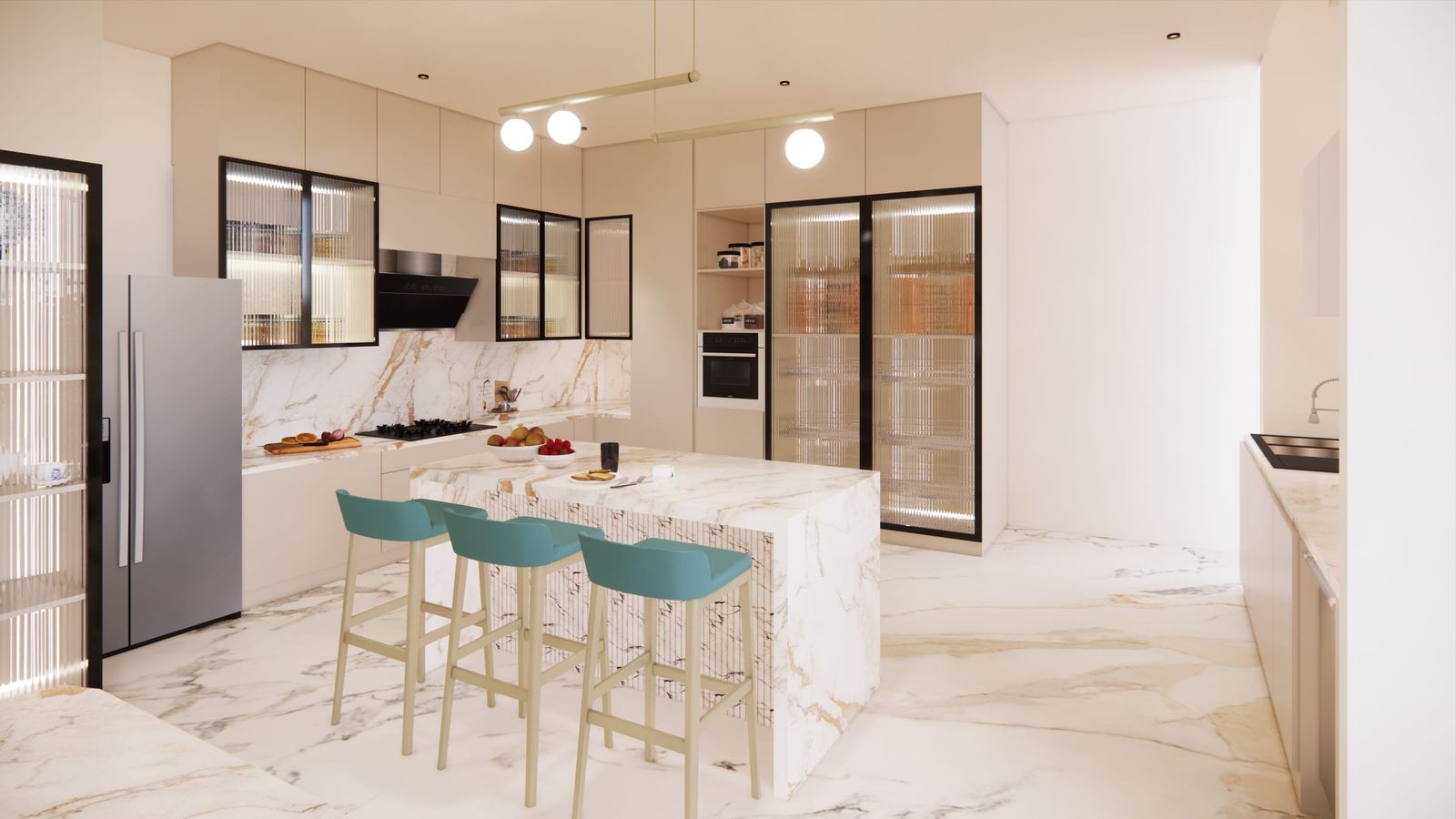
A tall cabinet whose shelves slide out, either on one frame that comes out whole or as separate baskets behind a door. It holds an astonishing amount in a narrow width, and everything is visible at once, so nothing is forgotten at the back. In an Indian kitchen it is where grains, dals, oils and spices go when there is no separate store.
How do you use a corner?
Every L-shaped and U-shaped kitchen has at least one corner where two runs meet, and without a fitting it is a deep, dark space reached on your knees. The options, roughly in order of how much they make usable:
- Pull-out corner systems that swing or slide the contents out of the corner and towards you
- Carousels, rotating shelves on a central post, good for pots and pans
- Blind-corner pull-outs, for a corner where one side is closed off
Which one fits depends on the size of the corner and whether a door, an appliance or a column is in the way, which is why the corner should be designed in the first drawing rather than solved once the cabinets are built.
What about wall units?
Wall units with lift-up flaps open upwards and stay where you leave them, so you are never ducking under an open door. Glass-fronted wall units, especially in fluted or reeded glass with a light inside, make storage part of the room’s lighting.
How do you tell good hardware from cheap?
Open a drawer fully, loaded, and push it shut from halfway: it should run smoothly and close itself softly. Look at the hinge for adjustment screws. Ask for the maker and the load rating, in writing. Good hardware makers publish both, and the best stand behind their mechanisms for many years.
What La Kova fits
La Kova fits hardware to Blum and Hettich standards in every kitchen and wardrobe: soft-close hinges and drawers, tandem drawer boxes, pull-out larders and hidden corner solutions. See bespoke kitchens or the short answer to what hardware we use.
From La Kova
- Bespoke kitchens Luxury modular kitchens, made to order for homes in Bangalore, Hyderabad and Chennai: designed with you in 3D, CNC-cut from BWP plywood, Blum and Hettich hardware.
- Wardrobes and walk-in closets Custom wardrobes, walk-in closets and dressing rooms for homes in Bangalore, Hyderabad and Chennai. Hinged or sliding, in veneer, acrylic, glass or laminate.
Read next
- L-shaped, parallel or island: choosing a kitchen layout How to choose between an L-shaped, parallel and island kitchen: the room each needs, how each works for Indian cooking, and the clearances to plan for.
- Acrylic, laminate, veneer or lacquered glass: choosing kitchen shutter finishes Acrylic, laminate, natural veneer and PU-lacquered glass compared for kitchen shutters: how each looks, wears, cleans and ages, and where each belongs.
- Sliding or hinged wardrobe doors: how to choose Sliding and hinged wardrobe doors compared: the space each needs, access, finishes, hardware and cost, and the room each suits best.
Planning a kitchen or a wardrobe? Send us the floor plan, or a photograph of the room.
Let's connect