Acrylic, laminate, veneer or lacquered glass: choosing kitchen shutter finishes
In short
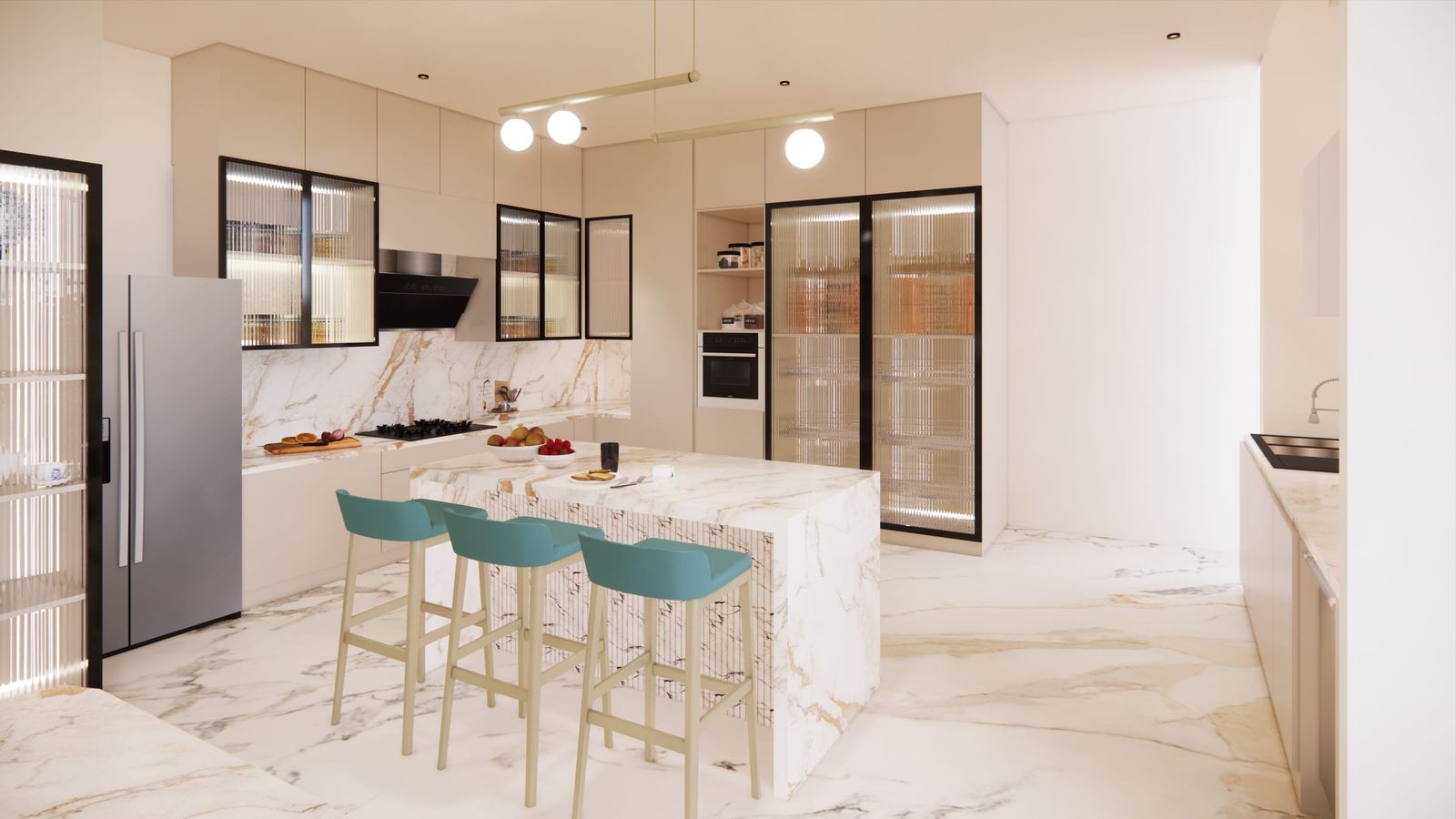
For a kitchen that is cooked in every day, the finish has to suit the cabinet it sits on. Matte acrylic gives a seamless face that hides fingerprints. Laminate wears best for the least money. Natural veneer brings real grain. Lacquered glass gives a deep gloss that wipes clean. Most good kitchens use two of them.
The shutter is the part of a kitchen everyone sees and touches. It is also where most of the choice lies, because the cabinet behind it is, or should be, the same box whatever the face. The four finishes we work in are matte acrylic, laminate, natural wood veneer and PU-lacquered glass. Each has a place, and the question is less “which is best” than “which goes where”.
What is the difference between acrylic and laminate?
Acrylic is a sheet of solid colour bonded to the face of the board, so the colour runs right through the surface rather than being printed on it. It gives a seamless, even face with no visible pattern, in gloss or matte. Matte acrylic made to resist fingerprints is the version that suits a kitchen in daily use, because high-gloss acrylic shows every touch.
Laminate is a printed decorative paper fused under heat and pressure into a hard, resin-saturated sheet. It is the hardest-wearing surface of the four against heat, scratches and knocks, comes in a very wide range of colours and wood looks, and costs noticeably less than acrylic.
| Matte acrylic | Laminate | |
|---|---|---|
| Look | Seamless, even, no pattern | Wide range of plain colours, woods and stones |
| Feel | Smooth, slightly soft | Harder, more textured |
| Wear | Good; marks can be polished out | Best of the four for daily knocks and heat |
| Cleaning | Wipes clean; anti-fingerprint versions hide touches | Wipes clean; textured finishes hide marks well |
| Cost | Higher | Lower |
Is veneer a good idea in a kitchen?
Yes, if it goes where it is admired rather than where it is splashed. Veneer is a thin slice of real timber laid on the board, so every door has real grain, and no two kitchens look quite the same. It ages the way wood does, deepening in colour with light.
What it does not like is standing water and constant heat. In practice that means veneer on the tall units, the island’s outer face, a breakfast counter or the open shelving, and a tougher finish on the doors either side of the sink and the hob. Good factory edge-banding matters more on veneer than on anything else, because an open edge is where water gets in and lifts the veneer.
What is PU-lacquered glass?
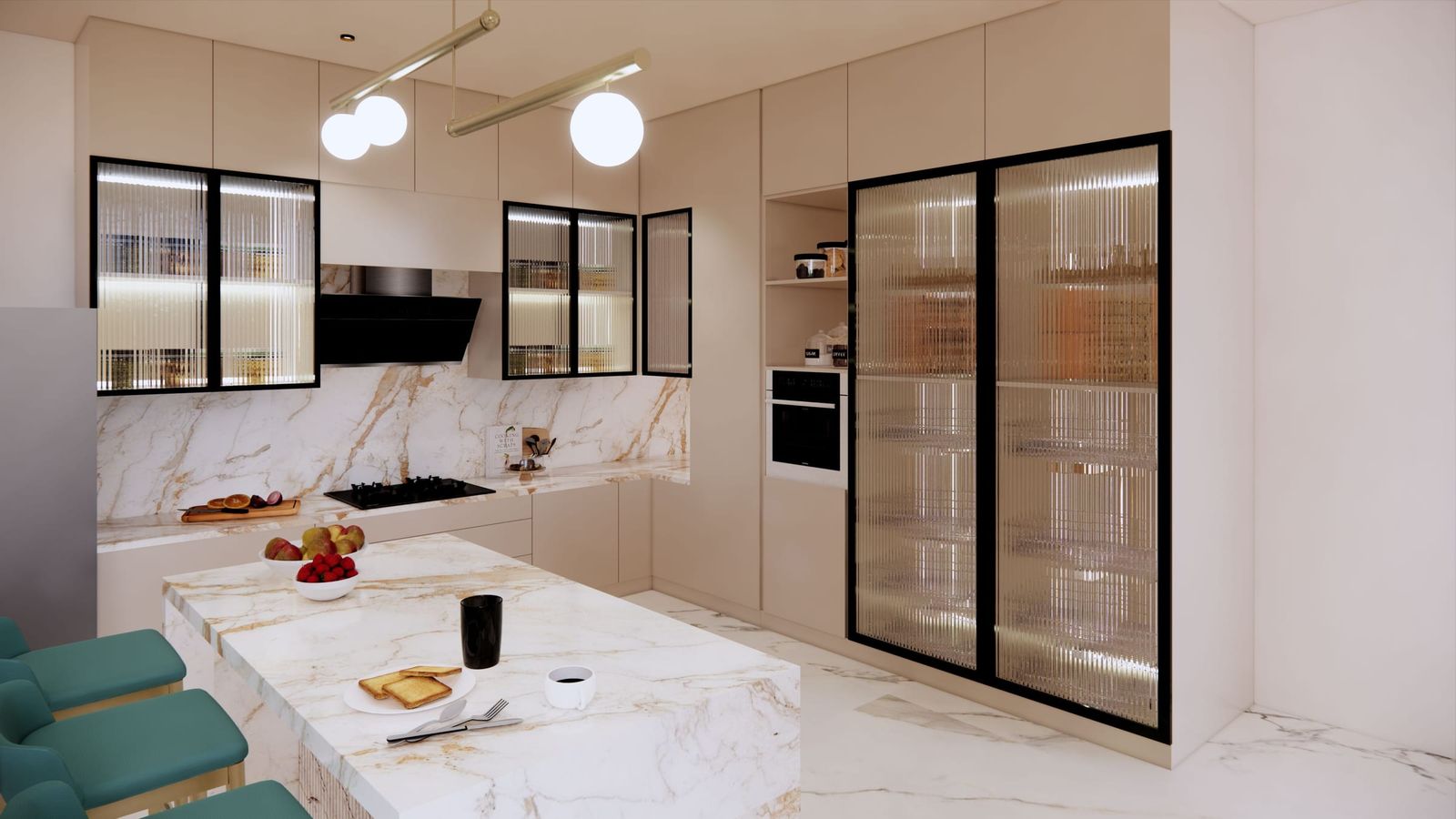
It is glass with a coat of coloured PU lacquer on the back, so the colour is seen through the glass. The result is the deepest gloss of any of these finishes, and the face is glass, so it wipes clean and does not stain. It suits the wall units and tall units, where the reflection lifts the room, and it works especially well in a darker colour.
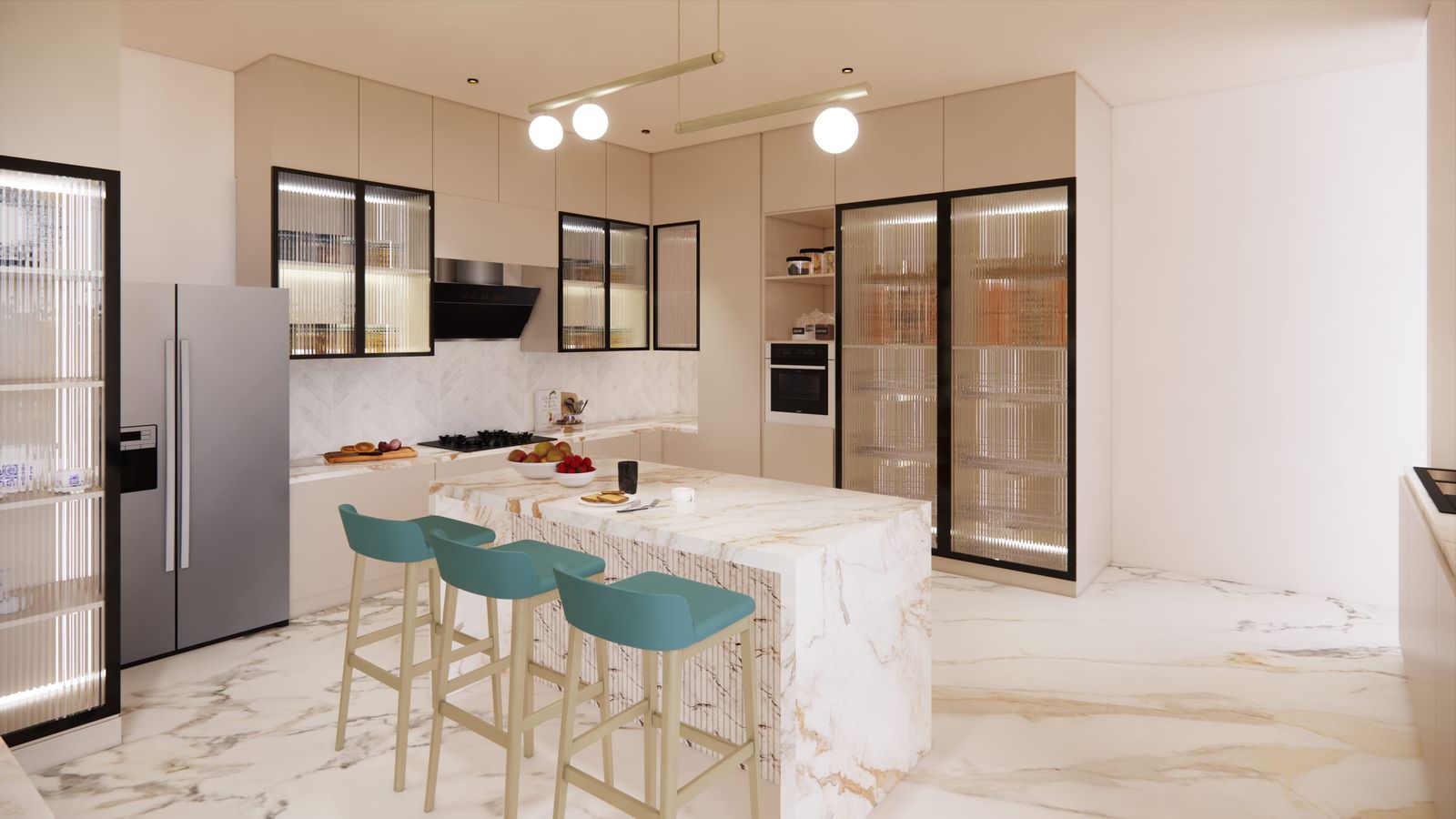
Clear, fluted or reeded glass in a slim frame is a related choice for wall cabinets and larders. It lets light through and softens what sits behind it, and a lit interior turns a run of storage into something closer to a lantern.
Gloss or matte?
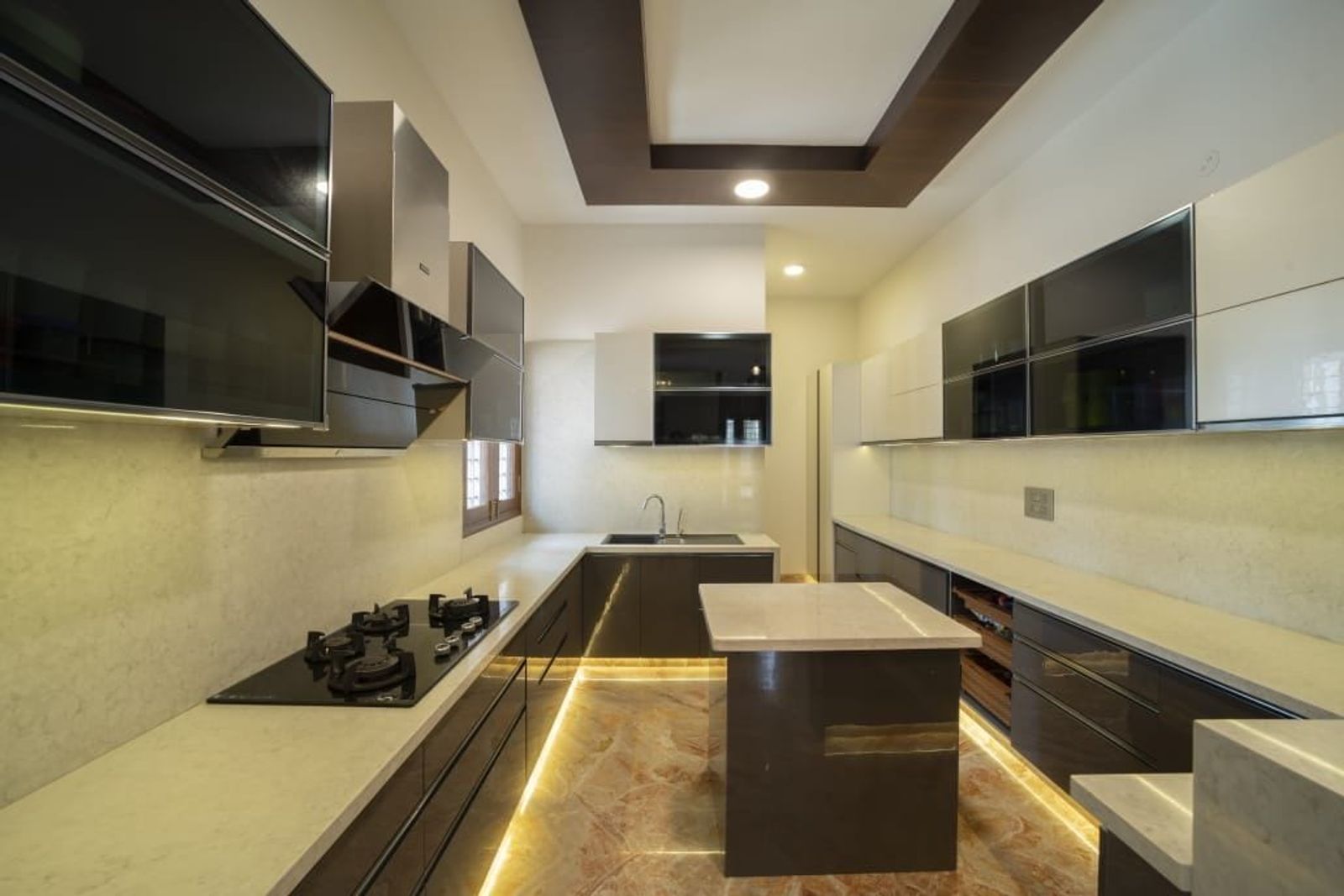
Gloss reflects light and makes a small kitchen feel larger, but it shows fingerprints, smears and fine scratches. Matte reads calmer and hides daily marks, which is why anti-fingerprint matte acrylic has become the default for handle-free kitchens that are opened by pressing the door itself.
A useful rule: gloss up high, matte down low. Wall units and tall units are touched less and seen more; base units are touched all day.
Which finish lasts longest in an Indian kitchen?
Laminate, for sheer resistance to heat, oil and knocks. But how long a kitchen lasts depends less on the face than on what is behind it and around it:
- The board. A shutter is only as stable as the board it is bonded to. Boiling-water-resistant plywood holds its shape where cheaper boards swell. See our guide to plywood grades.
- The edges. Edges sealed by machine in a factory stay closed to steam and water. Edges glued by hand on site are where most finishes fail first.
- The hinges and runners. A door that sags or slams chips at the corners. Soft-close hardware protects the finish as much as the fingers. See the hardware guide.
Can you mix finishes in one kitchen?
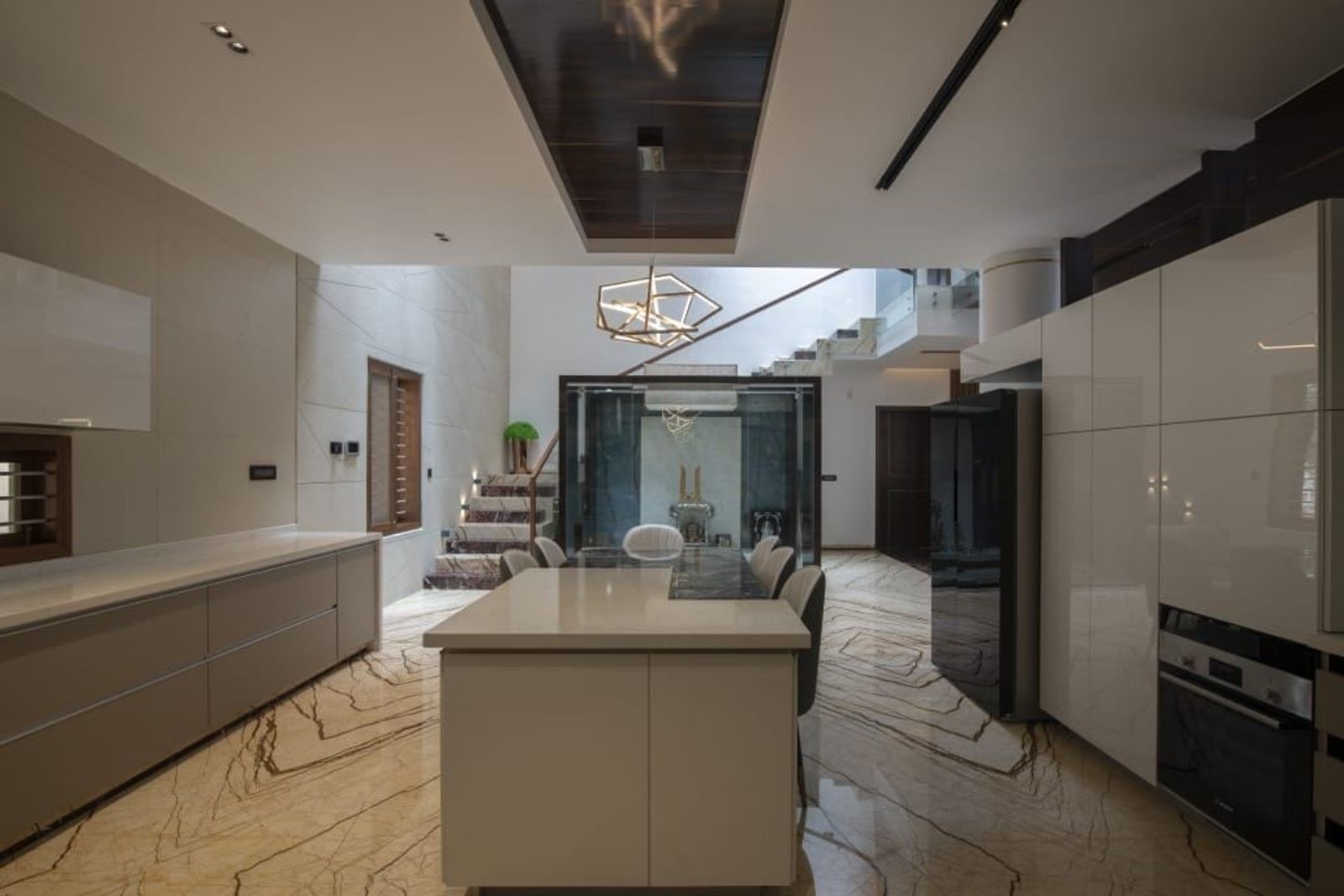
Most of the kitchens we draw do. A common split is acrylic or lacquered glass on the tall and wall units, where they are seen, and laminate on the base units, where the wear is heaviest. Veneer often appears once, on the island or a feature wall, so it reads as a deliberate piece of timber rather than a pattern repeated around the room.
The thing to avoid is three finishes that each want attention. Two that contrast, or one that runs through the whole room, almost always looks better.
What La Kova uses
Every La Kova kitchen and wardrobe is built on calibrated BWR and BWP plywood, edge-banded by machine in the Wood & Metal factory in Bangalore, with shutters in natural veneer, PU-lacquered glass, anti-fingerprint matte acrylic or laminate. See bespoke kitchens for how they come together, or the questions page for the short answer.
From La Kova
- Bespoke kitchens Luxury modular kitchens, made to order for homes in Bangalore, Hyderabad and Chennai: designed with you in 3D, CNC-cut from BWP plywood, Blum and Hettich hardware.
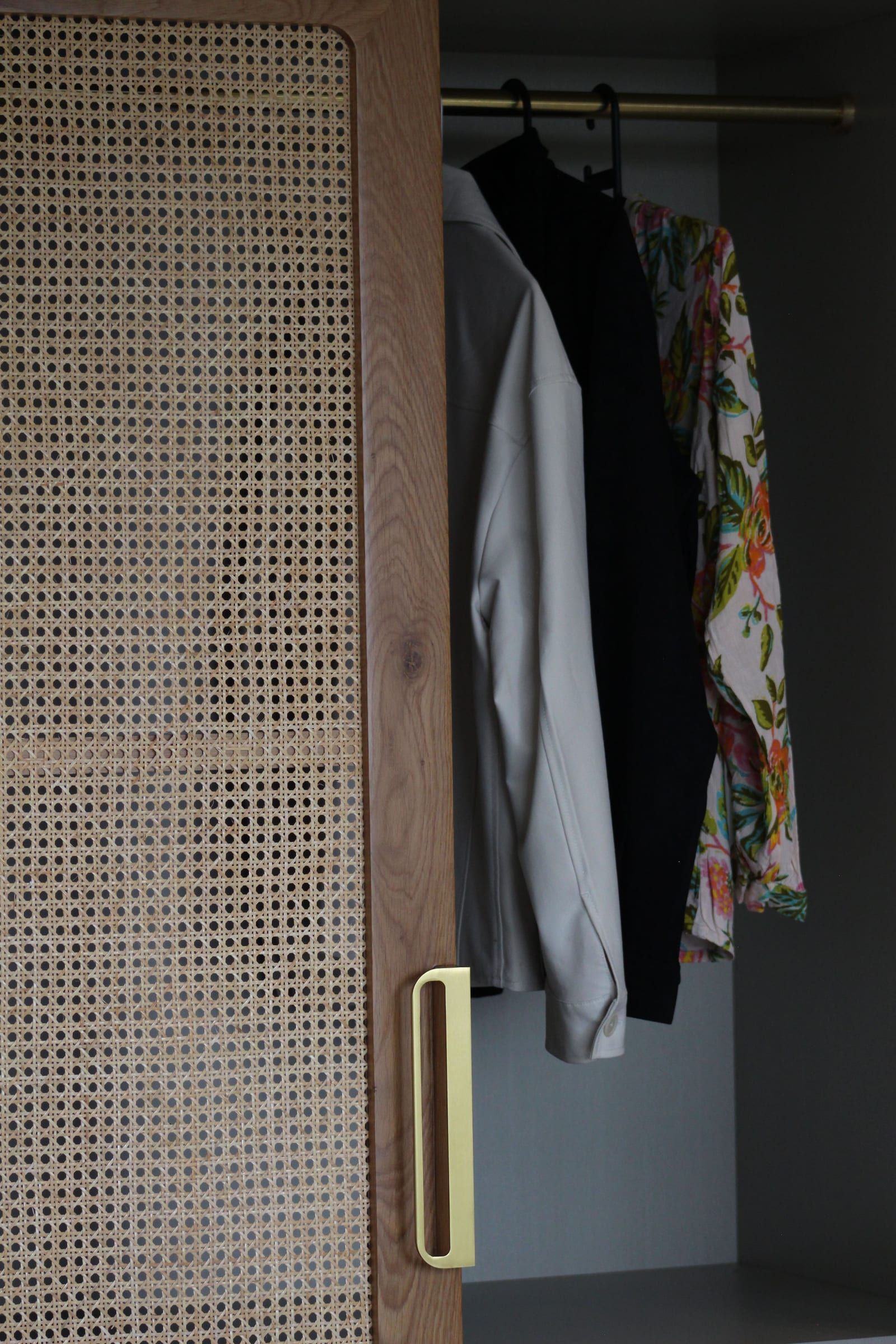
- Wardrobes and walk-in closets Custom wardrobes, walk-in closets and dressing rooms for homes in Bangalore, Hyderabad and Chennai. Hinged or sliding, in veneer, acrylic, glass or laminate.
-
Verdure
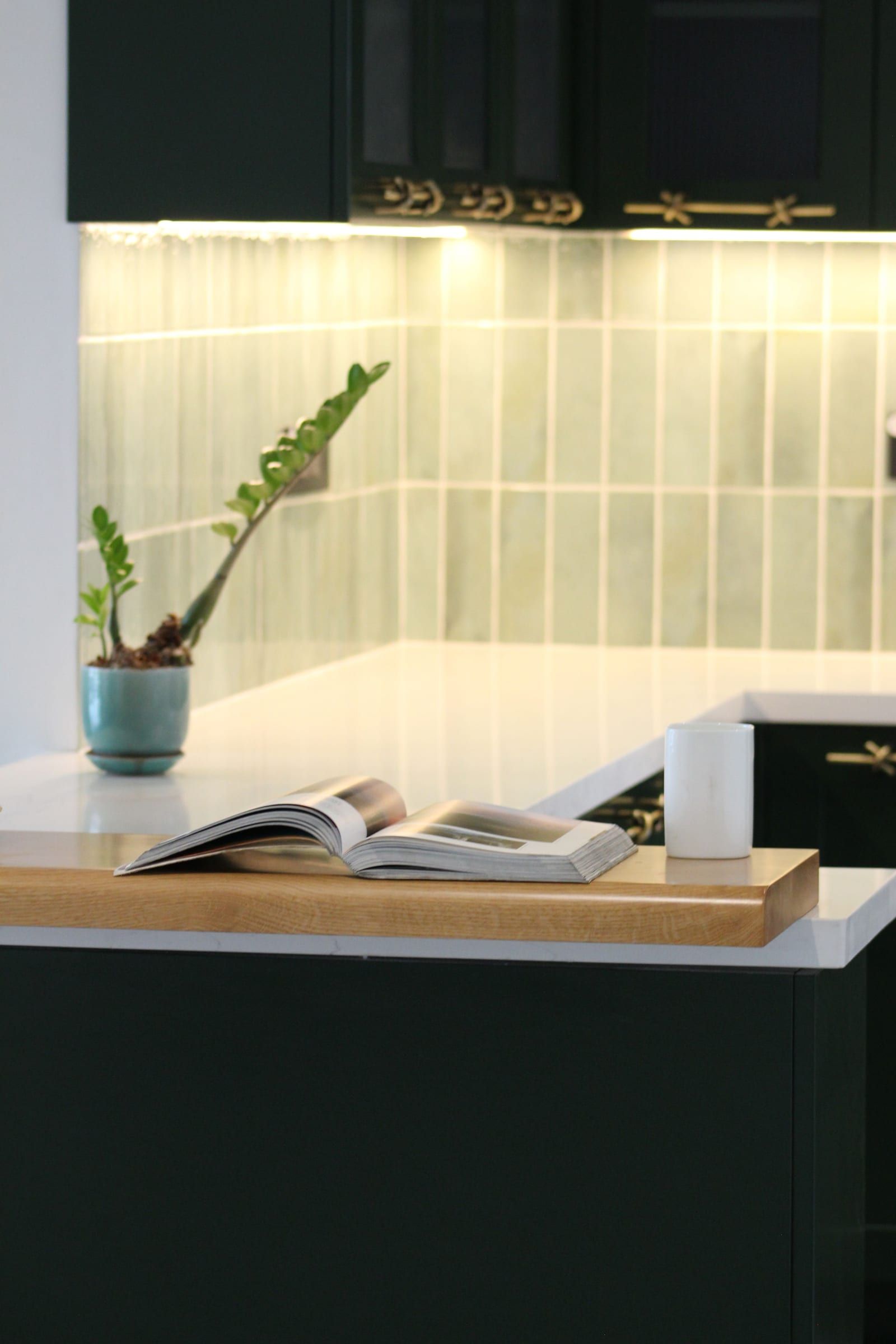
One deep green from the base cabinets to the wall units, a brass knot handle on every door, and wardrobes of timber and cane in the same house.
-
Alabaster
A design visualisation: a marble waterfall island under fluted glass, a run of tall units, a pantry wall lit from within and a utility behind.
Read next
- BWP, BWR or MR plywood: what kitchen cabinets should be built on MR, BWR and BWP plywood, blockboard, MDF and HDHMR compared for kitchen and wardrobe cabinets: what the grades mean and why the sink unit decides.
- L-shaped, parallel or island: choosing a kitchen layout How to choose between an L-shaped, parallel and island kitchen: the room each needs, how each works for Indian cooking, and the clearances to plan for.
- Kitchen hardware: hinges, drawers, larders and corners Soft-close hinges, tandem drawers, pull-out larders, corner units and lift-up wall cabinets explained: what each does, where it goes and what to check.
Planning a kitchen or a wardrobe? Send us the floor plan, or a photograph of the room.
Let's connect